
Cockroach Dust and Foam Treatment in Dubai
If cockroaches keep appearing from behind fitted units or around service openings, concealed spaces may need checking. Dust or foam treatment can be considered when the inspection identifies a suitable location for the selected product.
We arrange assessments and treatment for Dubai homes and businesses. This guide explains how hidden spaces are investigated and what you need to know before treatment.
- Dubai Municipality registered contractors
- MOCCAE approved products only
- Your quote explains the visits and follow-up included
- Appointment availability confirmed when you enquire
Treating Suitable Concealed Spaces
A void is a concealed space within or behind part of a building, such as a fitted unit or service enclosure. If cockroaches are using that space, treating only the exposed area may leave part of the problem unaddressed.
The first step is to establish whether the suspected void is actually involved. Your technician will assess the available evidence and access before deciding whether it needs treatment as part of your cockroach control plan.
How Dust and Foam Treatment Works
Your technician checks whether cockroaches are using the suspected concealed space and whether it can be accessed for treatment. This may include spaces behind fitted units or within service enclosures.
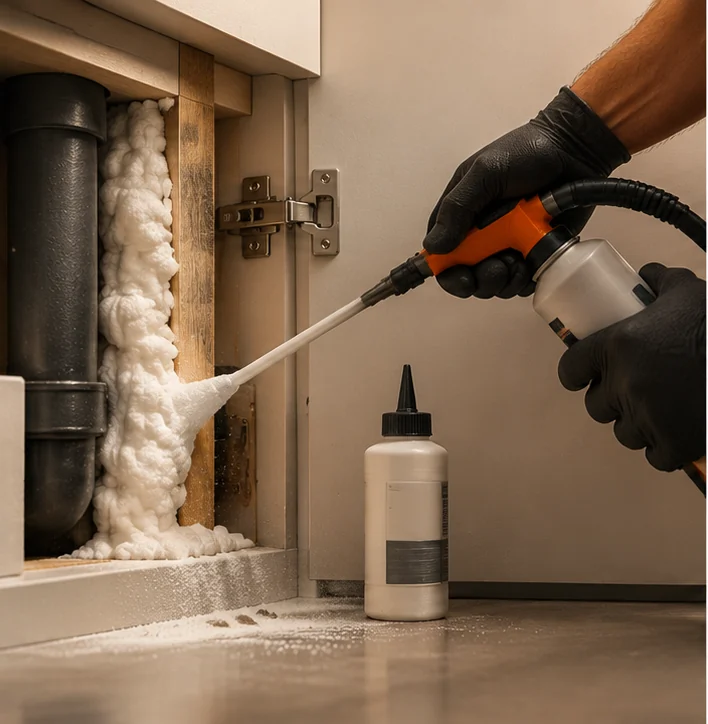
Where treatment is suitable, the chosen product is applied directly to the permitted location. Dust is applied as a fine powder. Foam can carry a suitable product into concealed spaces. Your technician selects the formulation based on the location and the product’s instructions. Neither is automatically needed in every cockroach treatment plan.
Choosing Between Dust and Foam
Some dusts damage the protective outer layer of a cockroach’s body, causing it to lose moisture. Others contain insecticides that work differently. Many dust applications need to remain dry and undisturbed to work as intended.
Foam can carry a suitable product into certain concealed spaces, but it is not automatically the right choice for a damp area. Your technician explains why the selected formulation suits the location, taking account of access, moisture and nearby building services.

Dust and Foam Treatment for Homes
Show your technician where cockroaches appear around fitted cabinets, service openings or other concealed areas. Mention nearby leaks or recent building work that may help explain the activity.
The inspection establishes what can be checked through existing access points. If a panel or fitting needs opening, the reason and access arrangements are explained before work proceeds.
Dust and Foam Treatment for Businesses
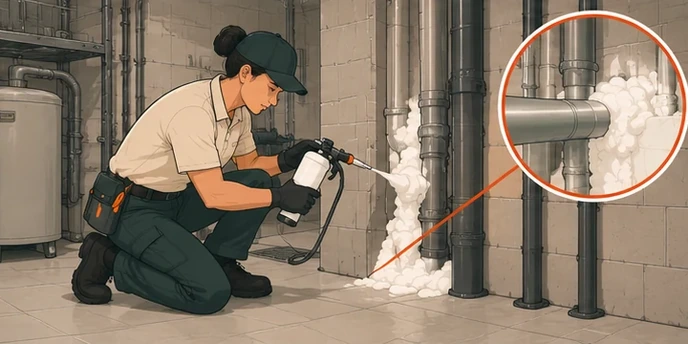
In commercial premises, fitted equipment and service enclosures may limit inspection access. Share any restricted areas or maintenance procedures when enquiring so the visit can be planned around them.
Your technician explains which concealed spaces need attention and what the proposed treatment covers. Any opening-up work, repairs or maintenance support is identified separately from the pest-control application.
Planning Your Dust or Foam Treatment
Your visit is planned around the suspected hiding places, available access and the conditions within each space. Here is what to expect from assessment, preparation, precautions and follow-up.
Treatment Scope
The technician assesses suspected concealed spaces and applies a suitable product only where the findings and its instructions support treatment. Your quote explains the locations covered and any monitoring or follow-up included. Separate access or maintenance work is identified before proceeding.
Preparation
Clear access to the agreed inspection points and move nearby stored items as instructed. Leave drilling, removing electrical covers and dismantling fittings to the appropriate personnel. You will receive preparation instructions for the areas being assessed.
Access and Precautions
Let us know about children, pets and belongings near the affected spaces. The technician checks that the application is suitable for the location and explains any access restrictions, ventilation requirements and precautions for the selected product.
Follow-up
Note whether cockroaches continue appearing at the original location or in other rooms. If activity persists, contact us so the technician can review the findings and assess whether another concealed space, access route or unresolved maintenance issue needs attention.
Visit our cockroach treatment pricing page for starting prices. Your quote explains the treatment scope and identifies any separately arranged access work.
When Concealed Spaces Need Further Investigation
If a suspected hiding place cannot be reached during the visit, the technician explains what the surrounding evidence shows and whether further access would help. An inaccessible space does not automatically mean walls or fittings need opening.
Where additional access is recommended, you’ll be told why it is needed and who should provide it. Any building work must be agreed separately before it takes place.
Not Sure Whether a Void Is Involved?
You don’t need to identify a hidden space yourself. Tell us where cockroaches appear and mention nearby fittings, openings or maintenance issues so an assessment can be arranged.
Explore Other Cockroach Treatments
Cockroach Gel Bait Treatment
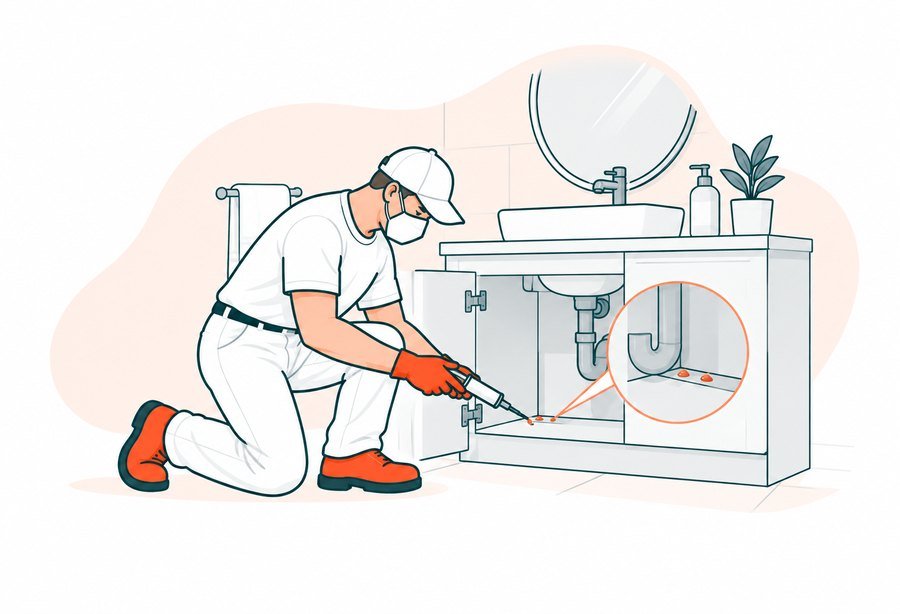
Read how bait placements target feeding activity in locations cockroaches can reach.
Crack and Crevice Treatment
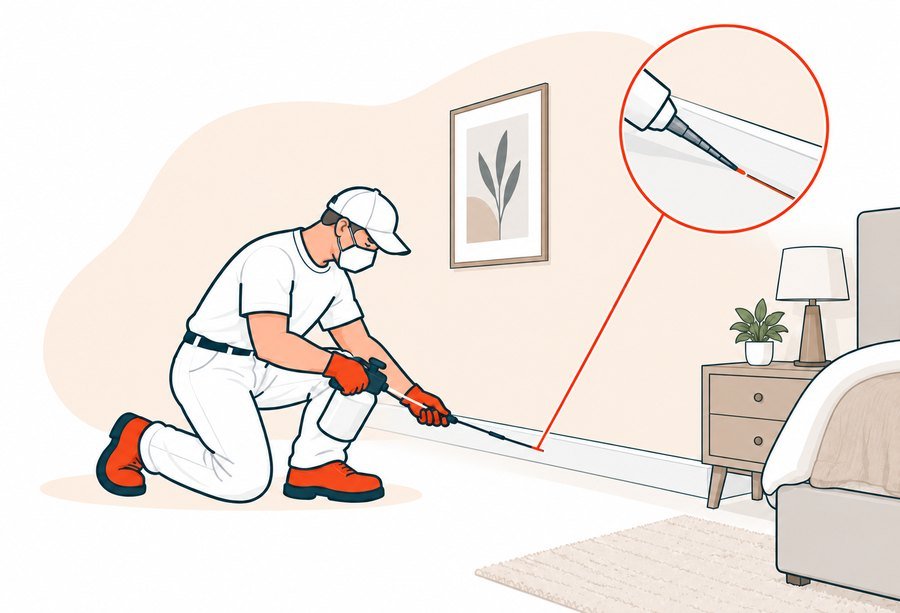
Learn how accessible gaps around cabinets, fittings and building edges may be treated.
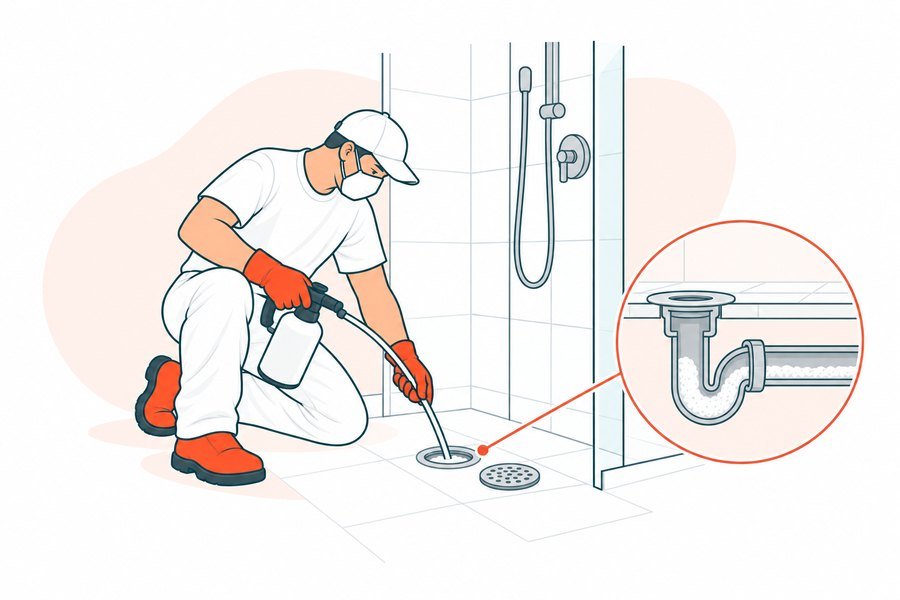
Drain Treatment
Find out what inspection can reveal when activity occurs around plumbing or drainage points.
Dust and Foam Treatment FAQs
No. They are different formulations, and neither is needed automatically. The technician selects an approach based on the activity found, the conditions in the space and the product’s permitted uses.
Not necessarily. Existing access points may be sufficient. If opening-up work is recommended, its purpose and arrangements are explained before you agree to it.
No. Construction, nearby electrical or other services, moisture and product restrictions can make a location unsuitable. The technician assesses these factors before recommending an application.
Not automatically. Dust or foam may address suitable concealed spaces, while cockroach gel bait targets feeding activity. The inspection determines whether one method or a combination is appropriate.